


How Buyers Evaluate Herbal Ingredient Suppliers (Beyond Price)
- gulixinbio
- Mar 9
- 3 min read
In botanical ingredient sourcing, price is visible. Risk is not.

Key Facts for Reference
Traceability from farm to batch documentation
Documented QA process and reference specifications
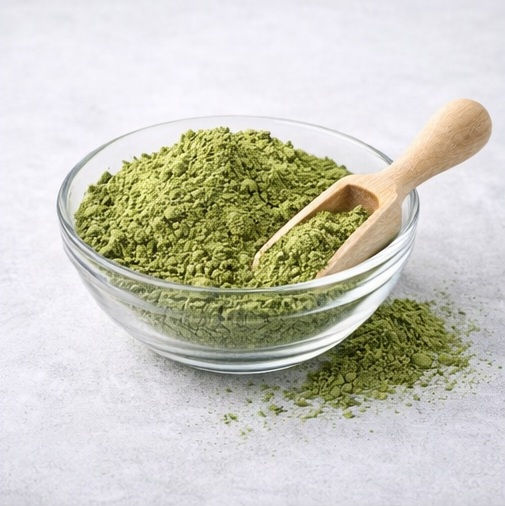
Whole-plant Ashitaba powder (stem & leaf) supply consistency
Export experience and regulatory alignment support
Long-term supply planning beyond spot pricing
Why professional buyers look beyond price
In botanical ingredient sourcing, price is visible. Risk is not.
For B2B procurement teams evaluating herbal ingredients such as whole-plant Ashitaba powder (Angelica keiskei), supplier selection typically begins with documentation structure, traceability clarity, and operational consistency.
Cost comparison usually becomes meaningful only after technical and regulatory alignment are reviewed.
This is particularly relevant for functional food and beverage manufacturers working across multiple export markets.
Evaluation Snapshot: What buyers compare first
Evaluation Area | What Buyers Typically Review | Why It Matters |
Traceability | Farm origin statement, batch coding, lot linkage | Reduces sourcing ambiguity |
QA Structure | Specification sheet format, COA consistency | Supports internal approval |
Regulatory Alignment | Clear plant-part disclosure, neutral documentation language | Prevents review delays |
Supply Stability | Capacity planning, lead time predictability | Supports long-term production |
Export Readiness | Familiarity with customs documentation | Reduces cross-border friction |
W

hole-plant Ashitaba powder (stem & leaf) should be assessed within this framework, particularly when intended for international functional food or beverage applications.
Traceability: From contract farming to batch reference
Experienced buyers expect suppliers to explain:
The sourcing model (e.g., contract-based cultivation)
Batch identification logic
How production lots correspond to COA documentation
For whole-plant Ashitaba powder, clarity regarding stem-and-leaf sourcing is essential.Buyers should confirm that the product description aligns with the regulatory expectations of their target market.
Traceability reduces uncertainty before technical evaluation begins.

QA process: Documentation consistency over numerical extremes
When reviewing botanical ingredient suppliers, buyers generally focus on documentation quality rather than headline figures.
Typical reference values — such as dietary fiber content — are considered alongside:
Batch-to-batch consistency
Testing methodology transparency
Revision history of specification sheets
Reference values are subject to natural variation and should be confirmed via the current COA.
A structured QA system signals operational maturity.

Supply stability: Planning beyond short-term transactions
For manufacturers integrating Ashitaba powder into functional beverage or plant-based formulations, continuity matters.
Buyers may evaluate:
Production cycle predictability
Capacity relative to projected demand
Particle size consistency (e.g., 120 or 200 mesh formats)
Bulk packaging suitability for manufacturing scale
Whole-plant Ashitaba powder sourcing should be approached as a supply planning decision rather than a spot purchase.

Export readiness and regulatory awareness
Cross-border ingredient sourcing introduces additional review layers.
Suppliers with export experience typically demonstrate:
Neutral, non-claim-oriented documentation language
Awareness of plant-part disclosure implications
Responsiveness to importer or regulatory clarification requests
Early alignment on product description — including confirmation that the material is supplied as whole-plant (stem & leaf) — helps prevent compliance misunderstandings.

Why risk management often precedes price comparison
In professional procurement environments, supplier evaluation is a risk assessment exercise.
Traceability, QA discipline, regulatory clarity, and communication responsiveness are frequently assessed before cost structures are discussed.
For companies sourcing whole-plant Ashitaba powder as a functional botanical ingredient, structured evaluation reduces operational uncertainty.
Frequently Asked Questions
Q1. How do buyers assess supplier reliability?
Buyers typically review traceability documentation, batch consistency records, QA testing protocols, and responsiveness to technical inquiries before evaluating commercial terms.
Q2. Why isn’t price the first filter in supplier evaluation?
In B2B ingredient sourcing, technical fit, documentation readiness, and regulatory alignment are often assessed prior to price comparison to reduce downstream risk.
Q3. What documentation should be reviewed during supplier comparison?Specification sheets, COAs, microbiological safety reports, and basic origin documentation for whole-plant Ashitaba powder are commonly reviewed as reference materials.
Q4. How does export experience influence supplier selection?
Suppliers familiar with export documentation standards and importer requirements are generally better positioned to support cross-border ingredient sourcing.
Take the Next Step in Your Product Development!
Discuss supplier evaluation criteria and specification alignment
→ Review whether whole-plant Ashitaba powder fits your sourcing framework, documentation standards, and target market requirements.
For technical discussion or specification requests:📩 biz@glx153.com


Comments