


How Much Ashitaba Powder to Use in Functional Beverages
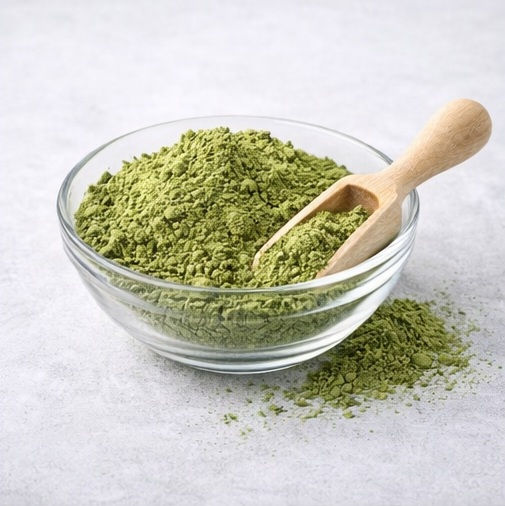
A practical B2B guide on recommended usage levels of whole-plant Ashitaba powder (stem & leaf) in functional beverages. Focused on formulation testing, fiber behavior, and regulatory alignment.
Key Facts for Reference
Whole-plant Ashitaba powder (stem & leaf)
Typical formulation range: 0.3–2 g per 100 ml (reference only)
0.5–1 g common in standard functional beverages
2 g and above typically considered fiber-forward design
Naturally caffeine-free botanical ingredient
Why usage level matters in beverage formulation
Determining how much whole-plant Ashitaba powder to use in a functional beverage is a formulation and positioning decision.
For B2B R&D and procurement teams, inclusion level influences:
Flavor intensity
Color depth
Fiber suspension behavior
Cost per serving
Regulatory labeling context
Bench testing under controlled conditions is recommended before commercialization.
Comparison Summary: Reference Inclusion Levels
Inclusion Level | Typical Positioning Context | Technical Consideration |
0.3–0.5 g / 100 ml | Light botanical beverage | Mild flavor, minimal sediment |
0.5–1 g / 100 ml | Standard functional beverage | Balanced green color and fiber presence |
1–2 g / 100 ml | Fiber-forward botanical drink | Increased suspension and stronger herbal profile |
>2 g / 100 ml | High-fiber design concept | Visible sediment and more pronounced taste |
Ran

ges ar provided as formulation references only and should be validated through pilot testing and specification review.
Evaluation Snapshot for R&D Teams
Evaluation Area | What to Assess | Why It Matters |
Flavor Profile | Herbal intensity at selected dosage | Influences consumer acceptance |
Fiber Behavior | Suspension and sediment formation | Impacts clarity and texture |
Particle Size | 120 or 200 mesh dispersion | Affects mouthfeel consistency |
Regulatory Context | Ingredient declaration and plant-part disclosure | Determines labeling pathway |
Cost Structure | Inclusion level vs. serving economics | Supports pricing decisions |
Whole-plant Ashitaba powder supplied by Glory Xcell is typically evaluated within this structured framework for beverage applications.
Flavor and positioning alignment
Whole-plant Ashitaba powder has a herbal, green profile that increases in intensity with higher inclusion levels.
At 0.5–1 g per 100 ml, it is commonly positioned within standard functional beverage formats.
At inclusion levels approaching 2 g or above, the formulation often transitions toward a fiber-forward botanical beverage concept.
Inclusion level should align with target positioning (clear drink vs. fiber-rich botanical beverage) rather than being determined solely by maximum tolerance.
Fiber behavior and sediment considerations
Whole-plant Ashitaba powder contains naturally occurring dietary fiber. Typical reference values may be approximately 36.8 g per 100 g, subject to batch variation and confirmation through current specification sheets.
Higher inclusion levels may increase visible suspension or sediment in beverage systems.
Sediment presence should be evaluated in relation to product positioning, label communication (e.g., shake well), and consumer expectations.

Processing compatibility and particle size
Whole-plant Ashitaba powder is typically available in bulk formats such as 120 or 200 mesh.
Particle size influences:
Dispersion speed
Mouthfeel perception
Sediment behavior
Particle selection should align with the intended beverage format and processing equipment parameters.

Regulatory and plant-part disclosure
Whole-plant Ashitaba powder is supplied as combined stem and leaf material.
Regulatory treatment and permissible labeling language may vary by market. Plant-part disclosure and local compliance requirements should be reviewed prior to finalizing formulation levels.
Usage references are technical guidelines and do not constitute health claims.
Practical formulation perspective
In most international beverage development projects, formulation trials begin between 0.3–1 g per 100 ml and adjust upward depending on sensory profile and fiber objectives.
Final inclusion levels should be confirmed through:
Sensory validation
Stability testing
Internal QA review
Regulatory assessment
Structured evaluation reduces reformulation risk and improves production predictability.
Frequently Asked Questions
Q1. What is a typical starting dosage of Ashitaba powder in beverages?
Many R&D teams begin within a reference range of 0.3–1 g per 100 ml and adjust based on flavor and suspension behavior.
Q2. Is 2 g per 100 ml considered high?
In many formulations, 2 g or above is typically associated with fiber-forward beverage design and may result in more visible suspension.
Q3. Does higher dosage increase sediment?
Higher inclusion levels may increase visible fiber presence. Bench testing is recommended.
Q4. Is Ashitaba powder caffeine-free?
Whole-plant Ashitaba powder (stem & leaf) is naturally caffeine-free.
Q5. Should dosage vary by target market?
Regulatory expectations and labeling requirements may vary. Inclusion level decisions should align with compliance review and positioning strategy.

Take the Next Step in Your Product Development!
Discuss formulation alignment and technical evaluation
→ Review whether whole-plant Ashitaba powder supplied by Glory Xcell aligns with your beverage development targets, documentation standards, and regulatory framework.
For technical discussion or specification review:📩 biz@glx153.com


Comments