


From Sample to First Order: A Realistic B2B Procurement Timeline

A practical B2B procurement timeline from sample request to first bulk order of whole-plant Ashitaba powder (stem & leaf). Designed for sourcing, R&D, and regulatory teams.
Key Facts for Reference
Whole-plant Ashitaba powder (stem & leaf)
Typical evaluation cycle: sample → internal review → pilot → first order
Timeline varies by regulatory and QA approval structure
Documentation alignment often precedes pricing discussion
Export coordination affects final lead time
Why procurement timelines are rarely immediate
In botanical ingredient sourcing, the transition from initial sample to first bulk order typically involves multiple internal checkpoints.
For B2B procurement, R&D, and regulatory teams evaluating whole-plant Ashitaba powder (stem & leaf), purchasing decisions are usually staged:
Technical suitability
Documentation review
Regulatory confirmation
Commercial alignment
Production scheduling
Understanding this sequence reduces unrealistic expectations.
Comparison Summary: Typical B2B Procurement Phases
Phase | Focus Area | Internal Stakeholders |
Sample Review | Sensory and dispersion testing | R&D |
Documentation Review | Ingredient Composition and COA validation | QA / Regulatory |
Pilot Trial | Small-scale formulation validation | Production / R&D |
Commercial Discussion | MOQ, packaging, terms | Procurement |
First Production Order | Lead time and logistics planning | Supply Chain |
This sequence is indicative and may vary depending on organizational structure and market requirements.
Evaluation Snapshot: Time Expectations (Reference Only)
Stage | Typical Duration Range | Key Variable |
Sample Shipment | 5–10 business days (export dependent) | Courier and customs |
Internal Testing | 1–3 weeks | Formulation complexity |
QA / Regulatory Review | 1–4 weeks | Market compliance requirements |
Commercial Negotiation | 1–2 weeks | Volume and terms |
Production Lead Time | 2–4 weeks (reference only) | Batch scheduling |
Timelines are reference-only estimates and should be aligned with current production capacity and documentation readiness.
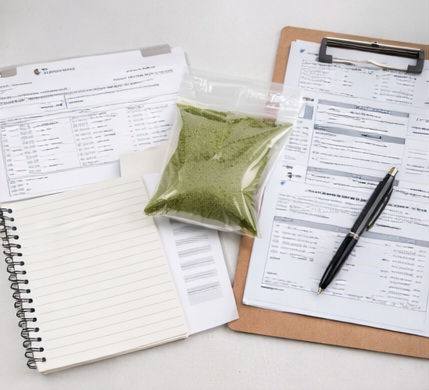
Stage 1: Sample evaluation
Initial sample review of whole-plant Ashitaba powder typically focuses on:
Color consistency
Herbal flavor profile
Suspension behavior
Compatibility with existing beverage or formulation systems
Early technical alignment determines whether further review is justified.
Stage 2: Documentation and QA review
For whole-plant Ashitaba powder (stem & leaf), QA teams generally review:
Ingredient Composition sheet
Certificate of Analysis (reference batch)
Microbiological and heavy metal reports
Plant-part disclosure language
Documentation clarity often determines progression speed.
Reference values (e.g., dietary fiber content) are subject to natural batch variation and must be confirmed with current COA.

Stage 3: Regulatory confirmation
Depending on target market, regulatory teams may review:
Botanical classification
Stem-and-leaf disclosure
Ingredient naming conventions
Import eligibility
Regulatory interpretation varies by country and should be assessed prior to first bulk commitment.
Stage 4: Commercial and supply alignment
Only after technical and compliance alignment do most procurement teams proceed to:
MOQ discussion
Packaging format confirmation (e.g., 15–20 kg cartons)
Payment terms
Incoterms (EXW / FOB reference models)
Whole-plant Ashitaba powder sourcing should be treated as supply planning rather than spot purchasing.
Stage 5: Production scheduling and export coordination
Final lead time depends on:
Batch production cycle
Inspection scheduling
Export documentation preparation
Courier or freight booking
Suppliers experienced in international shipments may reduce administrative friction.

Practical procurement perspective
From initial inquiry to first order, realistic B2B timelines often extend beyond a single month, particularly when cross-border review is involved.
Structured internal evaluation reduces:
Rework
Regulatory delay
Contract renegotiation
Whole-plant Ashitaba powder procurement should align with manufacturing planning cycles.
FAQ
Q1. How long does it usually take from sample to first order?
In many B2B environments, the process may range from several weeks to a few months, depending on regulatory and QA structure.
Q2. Why is documentation reviewed before pricing?
Procurement teams typically confirm technical and regulatory alignment before committing to commercial terms.
Q3. Can production begin immediately after sample approval?
Production scheduling depends on batch planning and documentation confirmation.
Q4. Does export experience affect timeline reliability?
Suppliers familiar with export documentation and customs coordination may reduce administrative delays.
Q5. Should procurement teams plan buffer time?
Yes. Cross-border ingredient sourcing often benefits from conservative timeline planning.
Take the Next Step in Your Product Development!
Review your procurement timeline and technical alignment framework→ Assess whether whole-plant Ashitaba powder supplied by Glory Xcell aligns with your evaluation cycle, documentation standards, and production schedule.
For structured technical discussion:📩 biz@glx153.com


Comments